

If your electric oven made a popping sound and immediately tripped the circuit breaker, that’s both startling and concerning. A breaker trip is your home’s electrical system protecting you — but what caused it? In most cases, the issue stems from an electrical fault inside the oven or the circuit.
In this article, we’ll break down the top reasons an oven pops and trips a breaker, symptoms to look for, and how to troubleshoot or fix each problem safely.
If your oven popped and tripped the circuit breaker, don’t ignore it. This guide explains what causes the problem, how to troubleshoot safely, and how to fix it. Common issues include the control board or heating element.

🔌 What Happens When an Oven Trips the Breaker?
Circuit breakers are designed to cut power when there’s a short circuit, ground fault, or overload to prevent fires or shocks. If your oven pops and then the breaker trips instantly, that often means a sudden surge or short in the oven’s electrical system.
Control Board Relay Failure (Short Circuit)
Symptoms
- A loud pop followed by the breaker tripping
- Oven display or controls go dark
- Possible burning smell or smoke
Cause
Inside the oven’s control board are relays that manage power flow to heating elements. If a relay gets stuck closed (often from overheating), it can create a short circuit — resulting in that pop and an immediate breaker trip.

Fix
If you’re inexperienced with electrical work, hiring a certified technician is safer.
- Unplug or disconnect power to the oven first. Wait for the components to cool first.
- Remove the back panel of the oven to access the control board.
- Take a quick photo of the board to use as a reference for when you’re reconnecting the wires later, and to be sure while you are ordering a replacement.
- Always match the replacement board to the exact make and model of your oven. These are available on Amazon for $40-350, depending upon your model.
- Disconnect all of the wires and remove the screws that keep the control board in place.
- Replace the control board and access panel, using your photo for reference.
- Connect the power supply and test the oven. It should not trip the breaker.
- If the breaker continues to trip, you have an additional error.
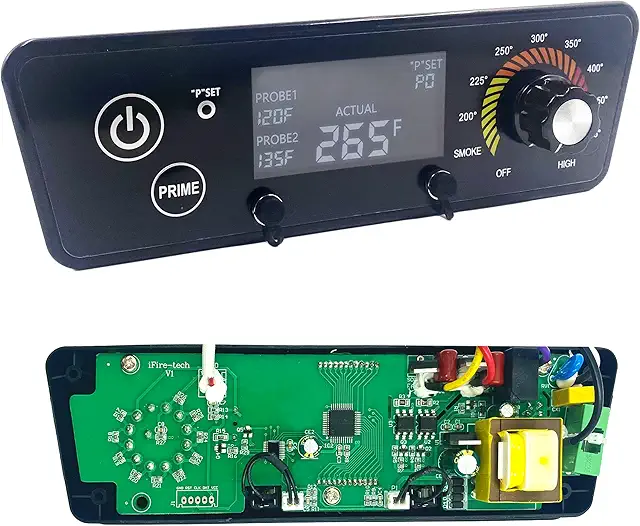
The relay can become stuck in a closed position due to overheating components. This can create a pop sound and smoke coming from the oven.


Burned-Out or Damaged Bake Element
When you look inside your electric oven, you’ll notice that it has at least one or two heating elements. Located at the top and bottom of the oven, they deliver heat to the entire space.
Symptoms
- Pop noise when heating begins
- Breaker trips either right away or shortly after preheating
- Visible damage or burn marks on the heating element
- Smoke or burnt smell inside oven cavity

Cause
Bake elements wear out over time. If the metal coating cracks or the internal wire fails, electricity can escape or overload the circuit. That overload triggers the breaker to shut the circuit down. Electricity will continue to flow through the bake element once it’s burned out, which is why the circuit breaker may sense a problem and trip as a protective measure.
Connect with an Appliance Repair Tech
Click here to use the chatbox to speak with one of our technicians.
No in-home service calls. No appointments.
Fix
- Turn off the power and allow the oven to cool before beginning repairs.
- Order a replacement element rated for your specific oven model. $20-50 on Amazon.
- Remove the old bake element — typically secured by just a few screws and a mounting plate. Disconnect the element. It is usually connected in two places.
- Reconnect power and test — if the breaker trips again, the issue might be elsewhere.
Exposed Wire Inside the Bake Element
Symptoms
- Breaker trips instantly when oven heats
- You might see gaps or breaks in the element’s outer sheath
- Pop or sizzling sound

Cause
The heating element contains a wire inside and a great deal of electricity passes through this wire. This wire must never be exposed because it can cause damage or shock (if touched). If the outer sheath cracks (from impacts or corrosion), the internal wire may contact metal parts inside the oven. This ground fault or short circuit triggers the breaker immediately to protect your home.
Fix
- Do not attempt to use the oven with exposed wires.
- Disconnect power and inspect the heating element carefully.
- Replace the entire heating element using only the correct part for your model.
- Wear insulated gloves and follow safety precautions when handling electrical parts.
- If you’re unsure, a qualified repair technician can safely replace the element.
🔎 Other Possible Causes
While the information above focuses on the most common faults, there are additional reasons an oven might trip a breaker. If you see smoke near the oven itself, you probably don’t need to look any further.
Wiring Problems
Loose, frayed, or damaged internal wiring can create shorts or intermittent faults that cause breaker tripping. Older homes may not have adequate wiring in the outlet you are using. Contact an electrician to troubleshoot your wiring issue.
Circuit Overload
If your oven shares a circuit with other high-draw appliances, the total load can exceed the breaker’s rating — especially on older wiring. Check to see that the refrigerator and laundry appliances have their own circuit. Unplugging each appliance separately may help you isolate the issue.
Faulty Breaker
Sometimes the breaker itself may be worn or overly sensitive. If it trips without structural causes inside the oven, electrical panel inspection might be necessary. This will require a licensed electrician.
🛠 Safety Tips Before You Troubleshoot
- Always turn off and disconnect power before touching any electrical components.
- Wear insulated gloves.
- If you suspect a wiring issue, don’t attempt DIY fixes unless you’re trained.
- When in doubt, call a licensed electrician or appliance repair technician.

Our kenmore electric built in oven model 790.40453800 that is 11 years old popped today and quit working. It didn’t trip the breaker and the oven light is still on, but there are no other signs of life in it. Nothing is showing on the electronic readout? Why, what happened?
This was very helpful to answer the question of… should I just flip the breaker switch back to ‘on.’ The answer is no, call the landlord. Thank you!