

If your Samsung washer is leaking water, it’s important to act quickly to prevent damage. The key is to quickly identify where the leak is coming from so you can fix the right part. Common places include: the door seal, drain pump, filter housing, hoses, or detergent dispenser. Below is a quick fix list, and then we’ll dive deeper into repairs.
Quick Fix for a Leaking Samsung Washer
- Unplug the washer and turn off the water supply.
- Check the drain hose and water supply hoses for cracks or loose connections.
- Clean and tighten the drain pump filter behind the front access panel.
- Inspect the door gasket for tears or debris buildup.
- Run a short cycle to confirm the leak has stopped.
Samsung Washer Hose Problems
Water inlet hoses
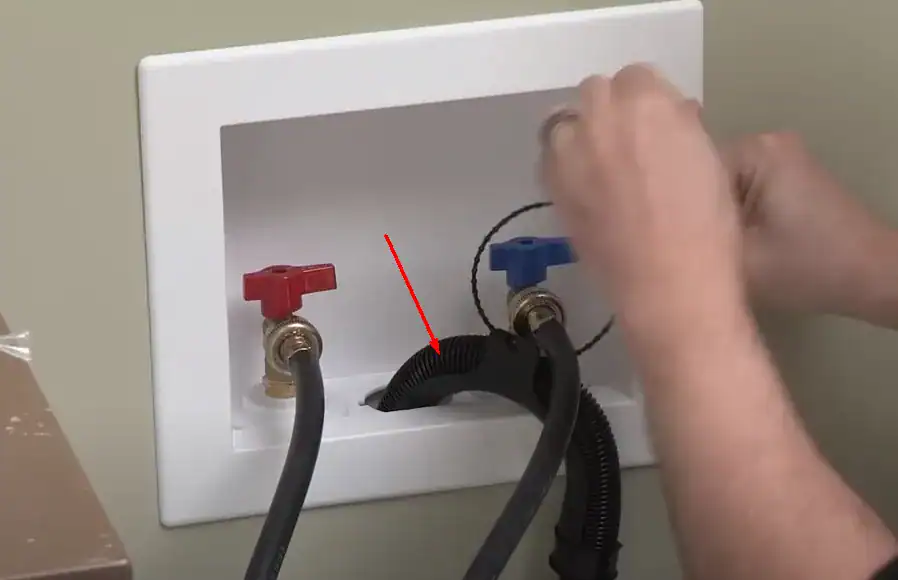
A leading cause of water leaks is improperly installed water inlet hoses. For a water tight seal, be sure the hose is correctly threaded onto both the washer’s inlet valve and the wall faucet. In addition to a tight connection, make sure you have the important rubber washer inside the hose coupling. This is a barrier against high-pressure leaks.
Over time, these hoses can also develop tiny cracks or pinhole leaks if they are kinked or pushed too tightly against the wall. Make sure there is enough clearance.
Drain Hose
The drain hose is for water leaving the machine. To prevent siphoning and leaking, the washer’s drain hose must be installed at the correct height:
- Minimum height: 24 inches (61 cm) from the floor
- Recommended height: 30–36 inches (76–91 cm)
- Maximum height: 96 inches (8 feet)
If the drain hose is too low, gravity can pull water out of the tub continuously. This causes leaks and long cycle times.
Additional Anti-Siphon Guidelines
- The hose should form a high loop before entering the standpipe.
- Do not seal the drain hose tightly into the standpipe — it needs an air gap.
- The standpipe diameter should be at least 2 inches.
- Only insert 6–8 inches of the hose into the drain pipe.
- Secure the hose with the supplied plastic guide to prevent it from slipping down.
Leak from the Door Seal (Gasket) — Causes & Fixes
If water is dripping from the front of your Samsung washer, the door gasket—the silicone rubber ring that creates a watertight seal—is likely obstructed or damaged.
Over time, things like excessive detergent could cause a buildup on the gasket. Other items like coins and socks can also get stuck on the gasket, creating just enough space for water to leak out onto your laundry room floor. Zippers can also get stuck on the gasket and tear the rubber.

How to fix It:
- Clear Obstructions: Check the folds of the gasket for coins, socks, or small items that might be preventing the door from closing flush.
- Remove Buildup: Use a damp cloth to wipe away hair, lint, and detergent residue from the entire surface of the seal and the glass door.
- Inspect for Damage: Look for visible tears, punctures, or cracks. Damage often occurs when zippers or buttons snag the rubber during unloading.
- Replace if Torn: If the gasket is ripped or compromised, it cannot be repaired with sealant; you will need to install a new door diaphragm to stop the leak.
Samsung Top Load Washing Machine Leaking Water Underneath
If your Samsung top load washer is leaking water from underneath, the most likely cause is a damaged drain pump. The drain pump sits in the lower portion of the machine and activates during the spin cycle to remove water through the drain hose. Over time, wear and tear can cause the pump housing to crack or fail, leading to water pooling on the floor — often noticed as a large puddle after a cycle finishes.
With a top-load Samsung washer, you’ll find that the drain pump is on the lower half of the machine. Cracks and damage on the drain pump aren’t fixable, so you’ll need to purchase a new pump to replace it. Most people may prefer to hire a technician to fix it for them, but you can also do it yourself if you have the know-how and the patience.
Replacement pumps are available on Amazon for around $21. The entire drain pump assembly runs about $86. Click Here. Double check model number before ordering and keep your user manual handy during the replacement process. Follow these steps to replace it yourself:
Note: we may receive a small commission from your purchase, at no additional cost to you.
Connect with an Appliance Repair Tech
Click here to use the chatbox to speak with one of our technicians.
No in-home service calls. No appointments.

How to Fix It
- Unplug the washer and turn off the water supply.
- Remove the access panel to reach the drain pump.
- Look for visible cracks, loose fittings, or signs of leaking around the pump housing.
- Before you remove the electrical connectors and water hoses, be sure to place a cloth underneath the pump. There will probably be leftover water inside that’ll spill out as you remove the pump.
- Place the new pump in the same position as the old one, reversing these steps. Reconnect the electrical connectors and hoses.
- Reassemble the washer and run a short cycle to confirm the leak is resolved. Keep towels handy, just in case you didn’t get hoses tight enough.
Water Leaking from the Bottom Front–Drain Filter
Sometimes, it’s easy to think that the leak is coming from the bottom of your Samsung washer. However, water pooling near the bottom-front of your Samsung washer often comes from the debris (drain) filter — rather than the machine’s internal plumbing.
The debris or drain filter. It is designed to filter out any debris or foreign objects that might have somehow ended up inside the washer. The filter housing may be leaking because the drain filter is clogged or not installed correctly.
You can find the debris filter behind a small panel that keeps it out of sight. Many people tend to forget that it’s there until water starts leaking out from it.

How to Fix It:
- Inspect the Emergency Hose: While the panel is open, ensure the small emergency drain hose plug is pushed in securely, as a loose plug can also cause water to bypass the filter area.
- Access the Filter: Open the small access panel on the bottom-front of the unit to locate the filter assembly.
- Drain and Clean: Remove the filter to clear away hair, lint, and foreign objects. Ensure the internal housing is also free of sludge or debris that could prevent a flush fit.
- Check Installation: A leak is frequently caused by a loose filter that wasn’t screwed in well. Re-insert the filter, ensuring it is properly aligned and screwed in tightly to create a watertight seal.
Samsung Washer Leaking From Soap Dispenser
Water leaking from the soap dispenser usually happens when incoming water pressure is too high or when the dispenser hose (hose drawer tub) is partially blocked. This hose directs detergent and softener from the drawer into the washer drum, so any restriction can cause water to spray back out of the dispenser.

Common Causes
- Overusing detergent, leading to internal buildup and clogged hose
- Water supply pressure set too high
- Clogged hose drawer tub
- Detergent or fabric softener buildup
- Foreign objects (e.g., detergent cap seal, small debris) blocking the hose
We have seen several times when the detergent cap seal falls into the soap dispenser, blocked hose and caused the leak from the dispenser.

How to Fix It
How to fix: Luckily, this type of leak is somewhat easy to resolve.
- Turn down the water pressure slightly at the supply tap, if the pressure is too high. As your machine starts to fill up, adjust the faucet to find the perfect level that your machine can take without spraying water out of the soap dispenser.
- Remove and inspect the dispenser for visible clogs.
- Flush the dispenser cup slowly with warm water to dissolve detergent buildup.
- If blocked by a solid object (candy or rock), unplug the washer and remove the top panel to pull it out.
- Run a self-clean cycle or an empty hot wash to remove internal detergent residue.
- Avoid overfilling the dispenser and use the correct amount of HE detergent. If you are using too much detergent, it is likely building up in other parts of the machine, as well.
- Follow this link to a YouTube video on clearing clogs from this area. Click Here.
Leaks From The Back Vent or exterior parts
Excessive detergent use can also cause another type of leak. This time, the leak could come out from the back vent of your Samsung washing machine.
What it is: Samsung washing machines have what’s called a Safety Air Vent. Much like the vent on other appliances like your dishwasher, this helps regulate the airflow and pressure inside the washer when in operation.
With an excessive use of detergent, suds can build up and leak out the back vent of the machine. This residue builds up over time, but can easily be cleaned out.

How to fix It:
Basically, you need to flush the soap residue with hot water. This is accomplished through the use of the Samsung washer self-cleaning cycle. The cycle consists of the highest temperature settings your machine can manage plus a lot of agitating to get all that residue loosened up. You may need to run it more than once if you still see soap coming out of the vent.
Suppose your washing machine doesn’t have a self-cleaning option. In that case, you can do it manually by running your washing machine empty with the highest temperature setting. Do this for as many times as you need to clear the residue. Do not add soap during these cleansing loads.
Read Here for a Detailed Description of how to Clear too Many Suds
Samsung Washer Leaking From the Bottom
If your Samsung washer is leaking from the bottom, it’s often due to a few common issues with hoses, seals, or internal parts–similar to the leaks described above. I’ll briefly list the common causes and fixes. Refer to the above sections for more detailed repair instructions. Causes:
- Loose or damaged drain hose – The hose may be improperly connected, kinked, cracked, or worn.
- Faulty drain pump – A broken or cracked pump housing can leak during the drain cycle. See details above.
- Worn tub seal or gasket – The seal between the inner and outer tub can degrade over time.
- Clogged or misaligned drain pump filter – Debris buildup or an improperly seated filter can allow water to escape.
How to Fix It:
- Unplug the Washer: Always disconnect power before inspecting internal components.
- Check the Drain Hose:
- Ensure it is tightly connected at both ends.
- Straighten any kinks and replace it if cracked or damaged.
- Inspect the Drain Pump:
- Remove the access panel and look for cracks or leaks around the pump.
- Replace the pump if it shows signs of failure.
- Clean the Drain Pump Filter:
- Turn the filter counter-clockwise to remove it.
- Clear out lint, coins, or debris that can block water flow.
- Reinstall the filter securely.
- Examine Seals and Gaskets:
- Look for worn, torn, or brittle seals around the tub and door.
- Replace any damaged seals to prevent leaks.
If you follow these steps and the washer is still leaking from the bottom, it’s a good idea to contact a technician — especially if internal seals or components need professional repair.
Installation & Leveling Issues
An unlevel washing machine is a frequent, yet overlooked, cause of mystery leaks. When the unit is tilted or unstable, the water level sensor may miscalculate the actual volume of water in the drum, leading to potential overfilling. Also, the intense vibrations from an unbalanced spin cycle can physically loosen hose connections and internal seals over time.
Ensuring the feet are properly adjusted and the machine is perfectly level.

General Washer Leak Prevention Tips
- Clean the drain pump filter every 1–3 months to prevent clogs.
- Inspect hoses regularly for cracks, bulges, or loose connections.
- Avoid overloading the washer, which can strain seals and hoses.
- Use the correct type and amount of HE detergent to reduce excess suds.
- Wipe down the door gasket after each wash to prevent buildup and deterioration.
- Make sure the washer is level to prevent water from pooling and leaking.
Common Error Codes on Samsung Washer
Follow the links in this table for correcting common error codes.
| Code | Meaning | How to Fix It |
| 5C / 5E / nd | Drain Error | Clean the debris filter at the bottom front. |
| 4C / 4E / nF | No Water | Check that your water taps are fully open and hoses aren’t kinked. |
| DC / UB / UE | Unbalanced | Open the lid and redistribute the wet laundry evenly. |
| Sud / 5ud | Excess Soap | Wait for suds to melt; run a cycle with no soap to flush the system. |

I’m having leakage issues when using the hot water option. The leak appears to be at the bottom left and the resulting spill is soapy water. No issues when using cold water only. Thoughts?
my Samsung 17 kg wash and dry leaks from underneath the the machine the moment water starts filling into the drum at the beginning of a cycle. All the water leaks out. The leak is not from the debris filter.
Our front load washer started stopping mid rinse or spin cycle, and leaving from the little white valve looking think in the back. It’s towards the top of the back panel, above the metal cover. When it does complete the cycle, after we’ve stopped and started it a few times, it usually has a lot of suds. We use tide pods and only one tide pod per load, even large loads. This happens with all size loads.
Samsung front loader started leaking during draining I’ve replace hoses and checked pump housing nothing out of the ordinary. Why would it still be leaking (almost all of the water that was in the tub) only while draining?
Can you please tell me why my Samsung washing machine only leaks on a eco drum clean only
I have a Samsung washing machine that appears to switch itself on and fill with water with the door open, why?
Hi. I’ve got a top loader and there appear to be a slow drip coming from the top when the hot water supply hose connects. The connector and hose are dry but the is a slow drip the seems to be coming from just further inside from the threaded connection and is dribbling down the back if the machine. Any advice? Thanks
Does it leak even when the machine is off? If yes, seems like the water inlet valve is not able to keep water pressure.
try to replace it and see if it will solve the problem
I have an interesting one. We have had our Samsung washer for several years, but there has been 3 times when we have gone to put a load in it and there is water pooling in the drum. We drain it, run a load and it’s fine. Google turns up many leaks, OUTSIDE, but few inside. And if they are inside, they are at the end of the cycle. This is happening AFTER the washer is done, over time. Any ideas?
Water pooling in the drum by itself or during the wash cycle? Seems like i do not quite understand your situation
After the wash cycle sir. And it’s intermittent, doesn’t happen every time.
We are having the same problem. Noticed a continual drip coming from the top “valve” where the soap and water come out at the beginning of the wash cycle. So, in between loads (if we go long enough) there will be a slight pool of water in the back of the drum. Hoping there is a quick fix!!
We have the same issue with our top load. It seems to be leaking from the soap dispenser. If we don’t empty the machine right after a load, it will leak into the finished load and we will have to put it through another spin. When we go a few days without using the washer, it has anywhere from an inch to 5 inches water in the machine.
We read that it might be a damaged soap dispenser, so we replaced it. The problem still occurs.
Not the soap dispenser, but the water inlet valve. Is this what you have replaced?
Did you figure this one out?
We have the same issue
Hi Eugene,
Water is spraying horizontally instead of vertically from the back of the Samsung washer dryer soap dispenser, hence resulting in the water leaking out from the bottom of the soap dispenser tray. I have cleaned all the water jets inside soap dispenser of limescale, I use calgon in all my wash, and I have adjusted the water pressure (at least I think that’s the correct pressure).
But every German I have spoken to tells me to just buy a new machine as it will cost me more to get it fixed. My 5 year warranty ended a few months before the leak unfortunately. I can’t speak German (where I live) so it’s been a challenge trying to determine whether it’s a small fix or I should just buy new machine.
Minimising expense is my key concern. Wondering if you would have a clue whether the water spraying out horizontally is normal?
Many thanks in advance!
Inspect and remove hoses connected to the dispenser.. Seems like something got stuck in there.
it is not a complicated job, so I think you don’t need a new machine yet..
I’ve got a front-loader that started leaking a short while ago. It appears to leak from the lower (but not bottom) front of the tub, and only when it is either turning (agitating) or emptying. Assuming it was the door gasket assembly, I ordered one and replaced it – but it still leaks. Again, only while it is turning and/or emptying. It does NOT appear to be the pump/housing. All the hose connections seem okay.
Thanks for any ideas and help.
I have a front load samsung washer and it seems to be leaking from the front on the bottom left hand side where our debris filter is. We have taken it out and cleaned it and yet the problem persists. I even pulled the white cap off the black hose that is in there with the filter and no water came out of it at all which I was expecting there would be. What else can I do? Or what else could it be?
Check inside door boot (door gasket), to make sure there are no holes in there
Has anyone had a leak from the washer drum? I’ve had a top loader for 5 years with no trouble. I just had water leaking from front bottom. I put washer up on Jack’s to see underneath. No signs of water spray from the back (where all water lines are. Grease is washed from front right hanger support.
continiuos leak from the drainage when the machine start to to fill but bcoz of the drainage the water couldnt get its setted level
Have you found the cause yet? Mine started doing this today
Hi! I have Sam’s front load washer and as soon as I turned it on, water was leaking at the bottom. I checked the filter and it was clean. What do you think whre it came from?
The front gasket and the hose was just replaced last February.
Please help.
Thank you.
Had the same problem, water would leak out the bottom instead of filling. Turned out that there was a large rubber hose on the bottom at the back that had come off. It has a pinch tip clamp. Just put it back on and it has been fine since. Thinking we might have jarred it a bit when moving it out to clean behind or maybe just over time it came loose.
Ok, this has happened to me twice:
Check the little fill sensor tube that shuts off the water when the tub is full. On Samsung it’s behind the back panel on the left side of the tub.
They tend to work themselves loose and come off. Just push it back on, install the clamp and you’re done. Super simple, and the tub will start leaking on the floor as the water reaches the little outlet the tube goes on if it comes loose.
Where is this piece? Picture?
If the pressure sensor hose came off the air chamber connected to the bottom of your tub, you might have other issues such as non-stop filling while leaking through the small hole. Since the pressure sensor never reads it filled up with the correct amount of water. If your lucky, your model will have a safety feature that will stop filling after a while of not getting to the correct pressure (time fill error), or even just throw off a 4c error indicating there’s a water inlet issue. But yeah.. I’m not sure how much water would spill out in that meantime.